
Lean Thinking in the Gas Distribution Industry: Driving Safety, Reliability, and Operational Excellence-Part-1
Introduction: Why Lean Thinking Matters in the Gas Industry
The gas distribution industry plays a vital role in modern economies. From residential cooking fuel to industrial energy supply, gas utilities form part of the critical infrastructure that powers homes, businesses, and industries. Reliability, safety, and operational efficiency are therefore not optional—they are essential.
However, gas distribution operations are inherently complex. Organizations must manage pipelines, storage facilities, filling stations, delivery logistics, safety monitoring systems, and customer service operations. Each of these processes involves numerous handoffs, regulatory requirements, and operational risks.
In such environments, even small inefficiencies can cascade into major operational challenges. Delays in cylinder filling operations can affect delivery schedules. Inefficient maintenance practices can increase equipment downtime. Poor inventory management can lead to stock shortages or excess holding costs.
Many of these issues stem from hidden inefficiencies embedded in everyday operations. Teams may spend time waiting for approvals, searching for tools, handling rework, or managing unnecessary paperwork. Over time, these inefficiencies accumulate and significantly affect productivity, cost structures, and service reliability.
This is where Lean thinking becomes particularly powerful.
Lean is a management philosophy focused on maximizing customer value while minimizing waste. Originating from the Toyota Production System, Lean has evolved into a globally recognized approach for improving operational efficiency across industries—including manufacturing, healthcare, logistics, and energy utilities.
For gas distribution companies, Lean offers a structured way to streamline operations, eliminate inefficiencies, and build a culture of continuous improvement. By focusing on value creation and waste elimination, organizations can enhance operational reliability while maintaining the highest standards of safety and compliance.
Understanding the Gas Distribution Ecosystem

Gas distribution is a multi-layered operational system that requires careful coordination between infrastructure, workforce, technology, and regulatory oversight.
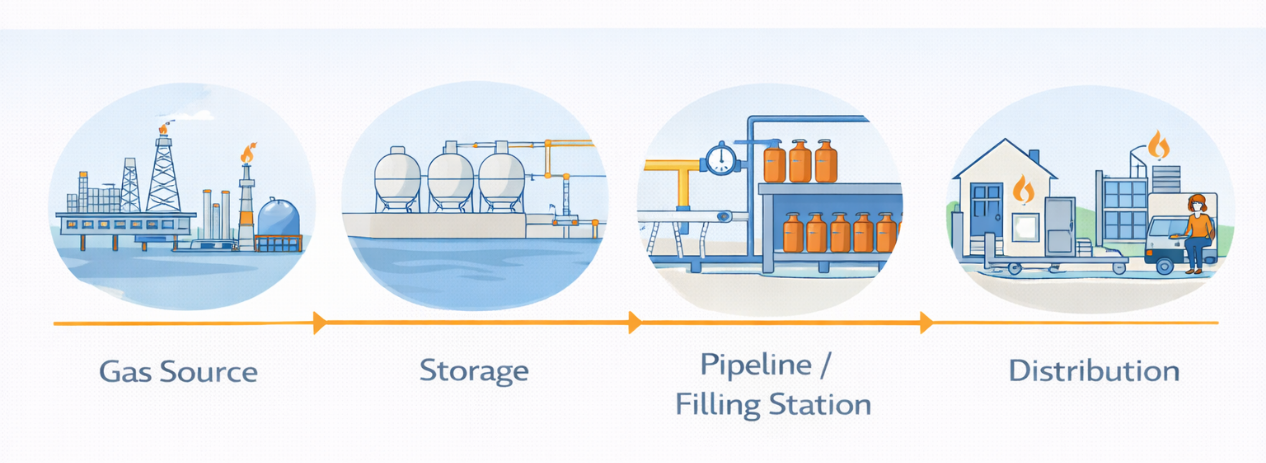
At a high level, the gas distribution value chain includes the following stages:
Supply and Storage
Gas is sourced from upstream suppliers and stored in dedicated facilities before being transported through distribution networks.
Transportation and Pipeline Networks
Gas travels through an extensive network of pipelines, regulators, and monitoring systems that ensure safe and efficient flow.
Cylinder Filling and Bottling Operations
For LPG-based systems, gas is transferred into cylinders at specialized filling plants before being distributed to customers.
Logistics and Distribution
Cylinder distribution involves route planning, vehicle management, and coordination with local distributors.
Customer Connections and Service
Gas companies handle new customer connections, service requests, billing inquiries, and complaint resolution.
Maintenance and Safety Monitoring
Continuous inspection and maintenance ensure pipeline integrity, equipment reliability, and regulatory compliance.
Each of these stages involves numerous operational processes. When these processes are not streamlined, inefficiencies can quickly emerge.
For example:
- Field technicians may travel long distances due to poor route planning.
- Maintenance teams may spend excessive time locating spare parts.
- Cylinder filling operations may experience bottlenecks during peak demand periods.
Such inefficiencies not only increase operating costs but can also affect service reliability and customer satisfaction.
Lean thinking helps organizations address these challenges by examining the entire operational system and identifying opportunities for improvement.
Operational Challenges in Gas Utilities
Gas distribution organizations face a unique set of operational challenges that require careful management.

Infrastructure Complexity
Gas utilities operate large networks of pipelines, compressors, valves, regulators, and storage facilities. Maintaining these assets requires careful planning and coordination.
Unexpected equipment failures can disrupt supply and create safety risks.
Field Service Coordination
Technicians are responsible for inspections, maintenance, repairs, and emergency response activities. Inefficient dispatching systems or unclear procedures can lead to delays in service delivery.
Maintenance and Asset Management
Many organizations rely on reactive maintenance practices where equipment is repaired only after failure occurs. This approach increases downtime and operational risk.
Customer Service Expectations
Customers expect reliable gas supply and timely service. Delays in connection requests or complaint resolution can negatively affect customer satisfaction.
Inventory Management
Spare parts, cylinders, and maintenance equipment must be carefully managed. Excess inventory ties up capital, while shortages can delay maintenance activities.
Regulatory Compliance
Gas utilities operate under strict regulatory frameworks that require detailed documentation, safety inspections, and compliance reporting.
These operational challenges often create layers of complexity within organizations. Without structured improvement approaches, inefficiencies remain hidden within everyday processes.
Lean thinking provides a framework for identifying and removing these inefficiencies.
Introduction to Lean Thinking
Lean thinking focuses on one central idea: creating maximum value for customers while eliminating activities that do not add value.
In Lean terminology, non-value activities are called waste.
Waste refers to any activity that consumes resources without contributing to customer value. In many organizations, a significant portion of daily work consists of such non-value activities.
Lean identifies eight common types of waste:

In gas distribution operations, these wastes may appear in various forms:
- Waiting time during cylinder filling operations
- Excess spare parts inventory in maintenance warehouses
- Repeated paperwork during safety inspections
- Long travel distances for field technicians
By systematically identifying and eliminating these wastes, organizations can significantly improve operational efficiency.