
Category: IT sectors

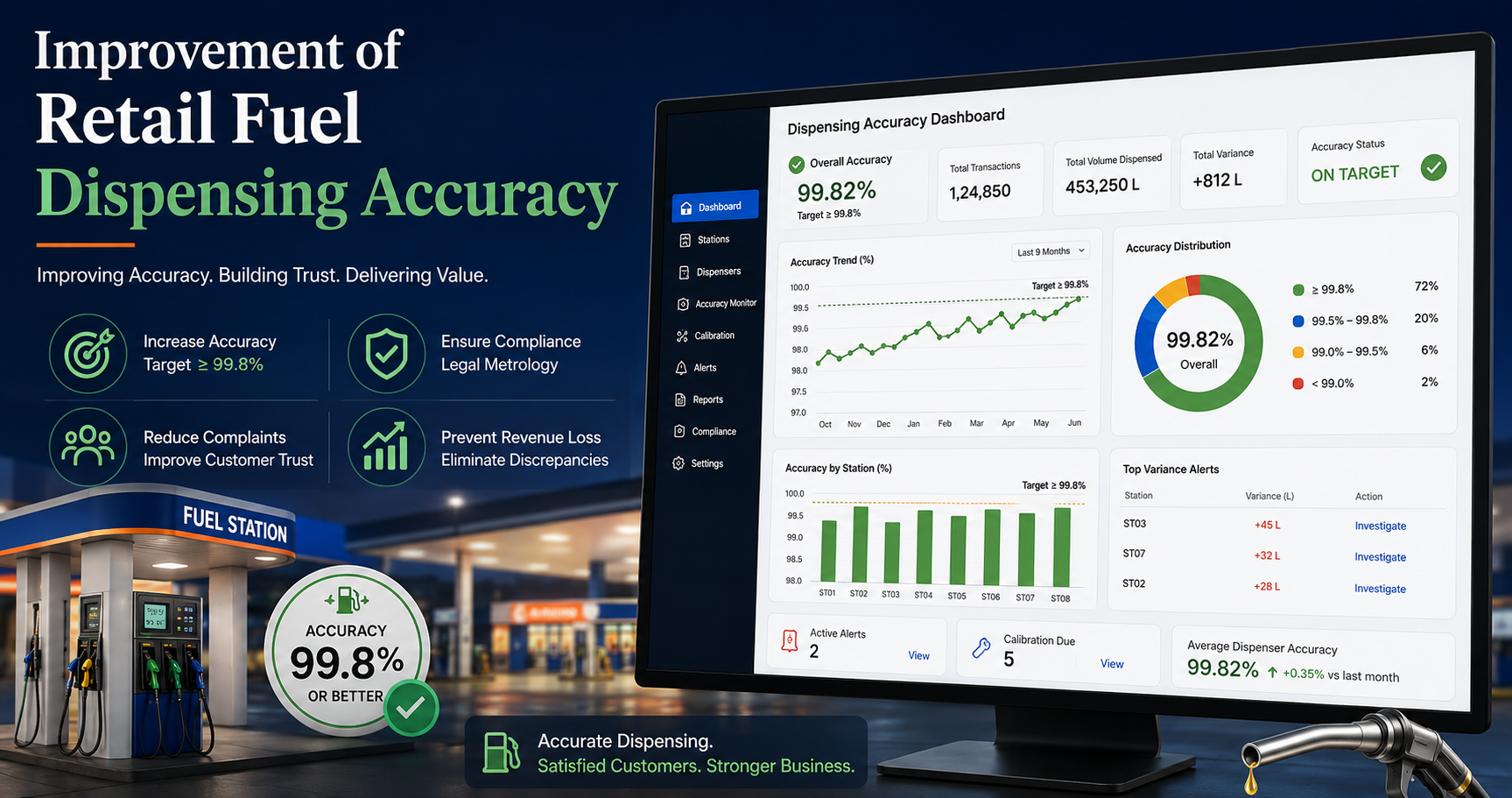
Improvement of Retail Fuel Dispensing Accuracy

This project focuses on improving the accuracy and consistency of fuel dispensing across retail fuel stations. Over the past nine months, fuel dispensing accuracy has averaged 98.5%, with significant variability that prevents consistent achievement of the desired performance standard. This inconsistency increases the risk of customer dissatisfaction, compliance issues, and financial losses.

The objective is to improve fuel dispensing accuracy from 98.5% to at least 99.8% by 30 June 2026 through calibration improvements, preventive maintenance, process standardization, equipment monitoring, and enhanced operational controls.

Successfully achieving the target will reduce customer complaints and fuel dispensing disputes, ensure compliance with Legal Metrology regulations, minimize revenue leakage caused by inaccurate dispensing, refunds, and rework, and strengthen customer trust while improving overall operational reliability.

Explore More


Reduction of Peak-Hour CPU Utilization in Data Center Operations

This project aims to optimize data center server performance by reducing excessive CPU utilization during peak business hours (9:00 AM–9:00 PM). Over the last six months, average CPU usage has remained at 75%, leading to application slowdowns, request timeouts, and an increase in IT incidents that negatively impact business operations and customer satisfaction.

The objective is to reduce average peak-hour CPU utilization to 65% or lower within four months by identifying performance bottlenecks, optimizing workloads, improving resource allocation, and implementing infrastructure and application performance improvements.

Achieving this target will enhance system responsiveness, improve application availability, reduce incident management efforts, and help the organization avoid approximately ₹30 lakhs per year in SLA penalties and productivity losses, while providing a more reliable experience for end users.

Explore More

Improving On-Time Delivery Rate in PMO Projects

PMO’s current On-Time Delivery (OTD) rate averages 80% over the last nine months, with significant variability ranging from 74% to 84%, which is well below the organizational target of 90%. This performance gap results in frequent project delays, leading to client dissatisfaction, contractual penalty costs, and inefficient utilization of project resources.
Delayed project closures also create resource bottlenecks, impacting the start of new initiatives and reducing overall PMO throughput. In addition, schedule overruns contribute to cost escalations, management firefighting, and reduced confidence in the PMO’s delivery capability.

Explore More

Reducing Financial Data Entry Errors

The current financial data entry process shows a persistent error rate averaging 3.2%,
causing delays in reconciliations, inaccurate financial reporting, and consumption of nearly
15% of the finance team’s monthly hours on rework. These inefficiencies weaken compliance
readiness, increase operational workload, and extend the month-end closing cycle.
By reducing the error rate to ≤1% through standardized templates, ERP validation rules, and
AI-driven anomaly detection, the organization will significantly strengthen the accuracy and
reliability of financial reporting. The project is expected to improve reporting precision by over
65%, decrease manual corrections by at least 70%, and reduce the month-end close time by
20%. Additionally, enhanced process stability and improved turnaround times will elevate
internal stakeholder satisfaction from 75% to 90%, demonstrating the strategic value of this
improvement initiative.

Explore More

Enhancing LOE Creation Efficiency Through TAT Reduction

The LOE Creation process is currently achieving only 79% SLA adherence, resulting in frequent
Turnaround Time (TAT) delays over the past nine months. These delays increase rework, reduce
operational efficiency, and negatively impact customer satisfaction. The project aims to improve
SLA adherence from 79% to 95% by December 2026 by reducing process delays and eliminating
major root causes. Achieving this goal will improve on time request completion, reduce manual
effort and rework, and enhance First Pass Yield. The expected outcome is an estimated 40%
reduction in process delays and a savings of approximately 250 operational hours annually. This
improvement will strengthen service quality, ensure consistent SLA compliance, and deliver
greater value to both customers and the organization.

Explore More

Improving Patch Compliance Ratein CyberSecurity

Low patch compliance in the vulnerability management process exposed the organization to increasedcybersecurity risks, delayed remediation activities, regulatory non-compliance, and potential financial lossescaused by unpatched systems. The existing Patch Compliance Rate of 82% was significantly belowtherequiredtarget of 95%, leading to higher chances of security incidents, operational disruptions, and audit concerns. ThisSix Sigma project focuses on improving the patch management process through automation, faster changeapprovals, enhanced vulnerability scanning, and effective escalation mechanisms to improve compliancelevels,strengthen cybersecurity posture, reduce operational risks, and improve overall service reliability andcustomerconfidence.

Explore More

Subscribe to Our Newsletter

©2026, ICEQBS All Rights Reserved.